
Manufacturing ERP: Aligning Data Across Finance & Production
Manufacturers frequently discover that their finance and production departments operate in silos, leading to inaccurate costing, missed deadlines, and ultimately, reduced profitability.
Why Disconnected Finance & Production Data Hurts Manufacturers
The challenges of modern manufacturing extend beyond the factory floor; they permeate deeply into financial management. Many organisations struggle with a fundamental disconnect between their finance systems and production operations, creating inefficiencies that impact every aspect of the business. This separation often manifests as inaccurate costing models, difficulty in forecasting demand, and an inability to effectively manage working capital. For example, a lack of real-time visibility into material availability can lead to costly expediting fees or, worse, production stoppages. Similarly, without integrated data, accurately calculating job costs becomes a laborious process prone to error, hindering informed decision-making regarding pricing and profitability.
The root cause often lies in disparate systems – finance software designed for general accounting purposes being forced to accommodate complex manufacturing processes. This frequently results in manual workarounds, spreadsheets overflowing with data, and a reliance on tribal knowledge that is difficult to scale or maintain. Furthermore, it creates a lack of trust between departments; finance may question production’s cost estimates, while production feels constrained by financial reporting requirements.
Understanding Manufacturing Operational Complexity
Manufacturing operations vary significantly in their complexity. Discrete manufacturing, where distinct units are produced (like engines or electronics), presents unique challenges compared to process manufacturing (such as food processing or chemicals). Similarly, make-to-stock environments differ greatly from those operating on a make-to-order basis. The level of operational intricacy dictates the type and sophistication of ERP system required.
Consider a manufacturer producing bespoke engineering components. They might deal with complex bills of materials, intricate routings involving multiple operations, and frequent design changes. This demands an ERP solution capable of handling detailed production planning, accurate costing, and robust quality control. In contrast, a company producing standard consumer goods in high volumes may benefit from a more streamlined system focused on efficiency and inventory management.
The key is to select an ERP platform that aligns with the organisation’s specific manufacturing model – one that supports its unique processes rather than forcing them into a generic template. This involves carefully assessing factors such as production planning methods, warehouse complexity, regulatory compliance requirements, and the need for advanced features like capacity planning or asset management.
Microsoft Dynamics 365 Business Central for Growing Manufacturers
For small to mid-sized manufacturers experiencing growth pains, Microsoft Dynamics 365 Business Central offers a compelling solution. It provides connected finance, production, purchasing, inventory, warehousing and reporting within a single manageable platform. This integration eliminates data silos, improves visibility across the entire operation, and reduces administrative overhead.
Business Central’s features are particularly beneficial for manufacturers employing discrete manufacturing or light assembly techniques. Bills of materials, routings, production orders, and capacity planning tools enable efficient production scheduling and resource allocation. The system’s ability to track material consumption against planned usage provides valuable insights into production efficiency and cost control.
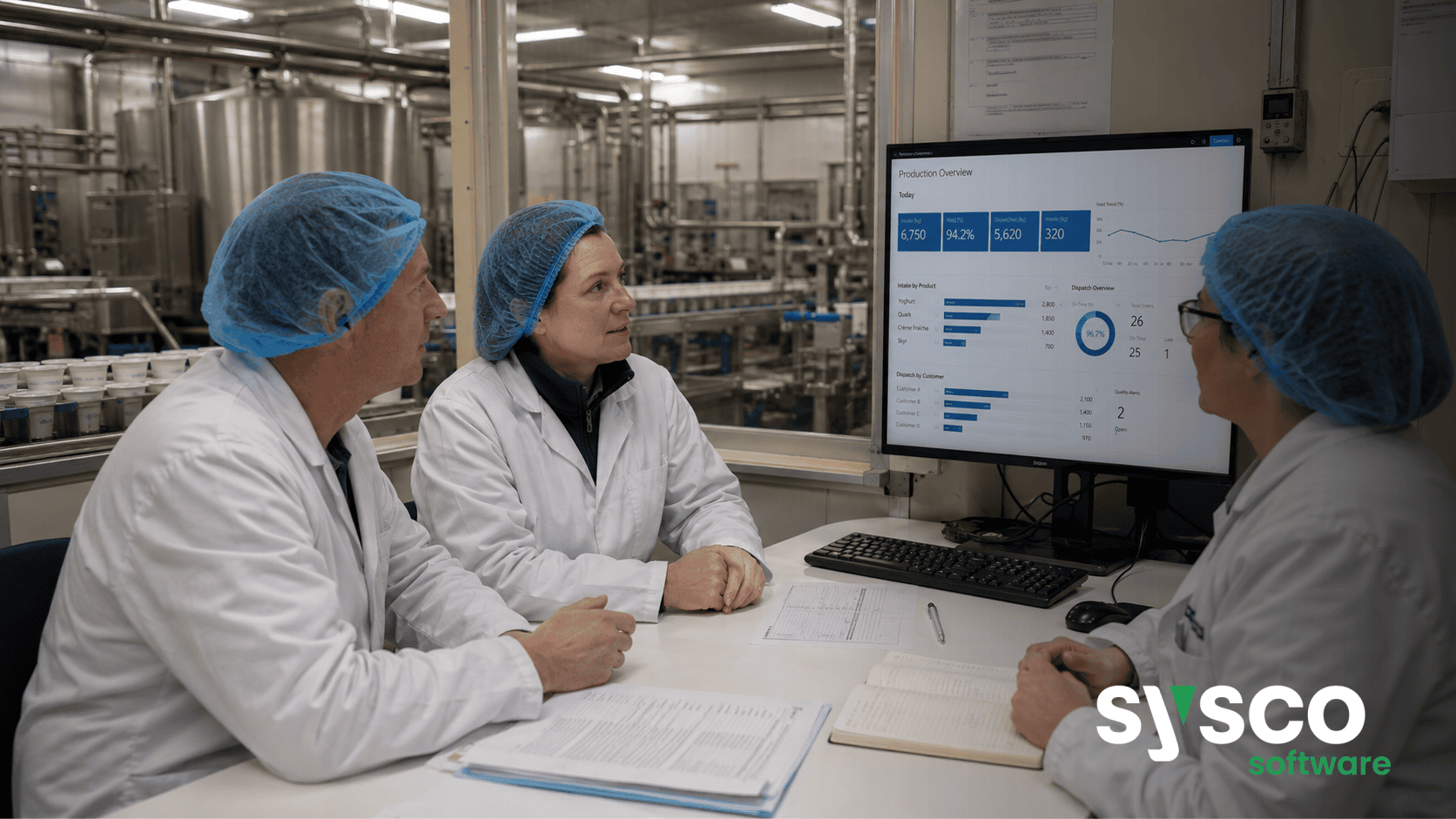
Furthermore, Business Central’s integration with Power BI allows for the creation of customisable dashboards that provide real-time visibility into key performance indicators (KPIs). This empowers managers to make data-driven decisions and proactively address potential bottlenecks. The availability of Sysco Essential Apps further extends Business Central’s functionality, providing tailored solutions for specific manufacturing needs.
Dynamics 365 Finance and Supply Chain: Enterprise-Level Control
As manufacturing operations grow in complexity or span multiple sites, the need for a more robust ERP solution becomes apparent. Dynamics 365 Finance and Supply Chain Management (F&SCM) is designed to meet these demands, providing enterprise-level control over finance, planning, procurement, production, warehouse management, asset tracking, and multi-entity operations.
The challenges of managing geographically dispersed manufacturing facilities, complex supply chains, or advanced warehousing requirements necessitate a system capable of standardising processes across sites and ensuring consistent data visibility. F&SCM delivers this through features like master planning, production control, warehouse management, and quality management—all integrated within a single platform.
For example, a manufacturer with several factories producing different product lines can leverage F&SCM’s multi-entity capabilities to consolidate financial reporting, manage intercompany transactions, and optimise resource allocation. The system’s advanced planning tools enable proactive demand forecasting and inventory optimisation, minimising stockouts and reducing carrying costs.
Assessing Your Manufacturing ERP Readiness – A Practical Guide
Before embarking on an ERP implementation, it’s crucial to assess your organisation’s readiness. This isn’t just about evaluating software features; it’s about understanding your internal processes, identifying dependencies, and aligning stakeholders.
- Process Mapping: Document your current manufacturing processes in detail, from order entry to finished goods delivery.
- Stakeholder Alignment: Engage representatives from finance, production, procurement, and other key departments to ensure everyone understands the scope of the project and their roles within it.
- Data Quality Assessment: Evaluate the accuracy and completeness of your existing data. Inaccurate or incomplete data will only perpetuate problems in a new ERP system.
- Change Management Planning: Develop a plan for managing the organisational changes that accompany an ERP implementation, including training, communication, and user adoption strategies.
Sysco Software offers a Manufacturing Process and ERP Readiness Review service to assist organisations through this critical assessment phase. This discovery service maps planning, production, stock, costing, quality and reporting requirements before platform selection or implementation, preventing generic ERP design and aligning finance and operational stakeholders.
Choosing the right Microsoft Dynamics 365 ERP solution—whether Business Central or Finance and Supply Chain—is a strategic decision that can significantly impact your organisation’s performance. By carefully assessing your needs, understanding your manufacturing model, and leveraging expert guidance, you can select and configure a system that empowers growth, improves efficiency, and drives profitability. Learn more about how Sysco Software delivers tailored Dynamics 365 ERP solutions for manufacturing organisations.






