
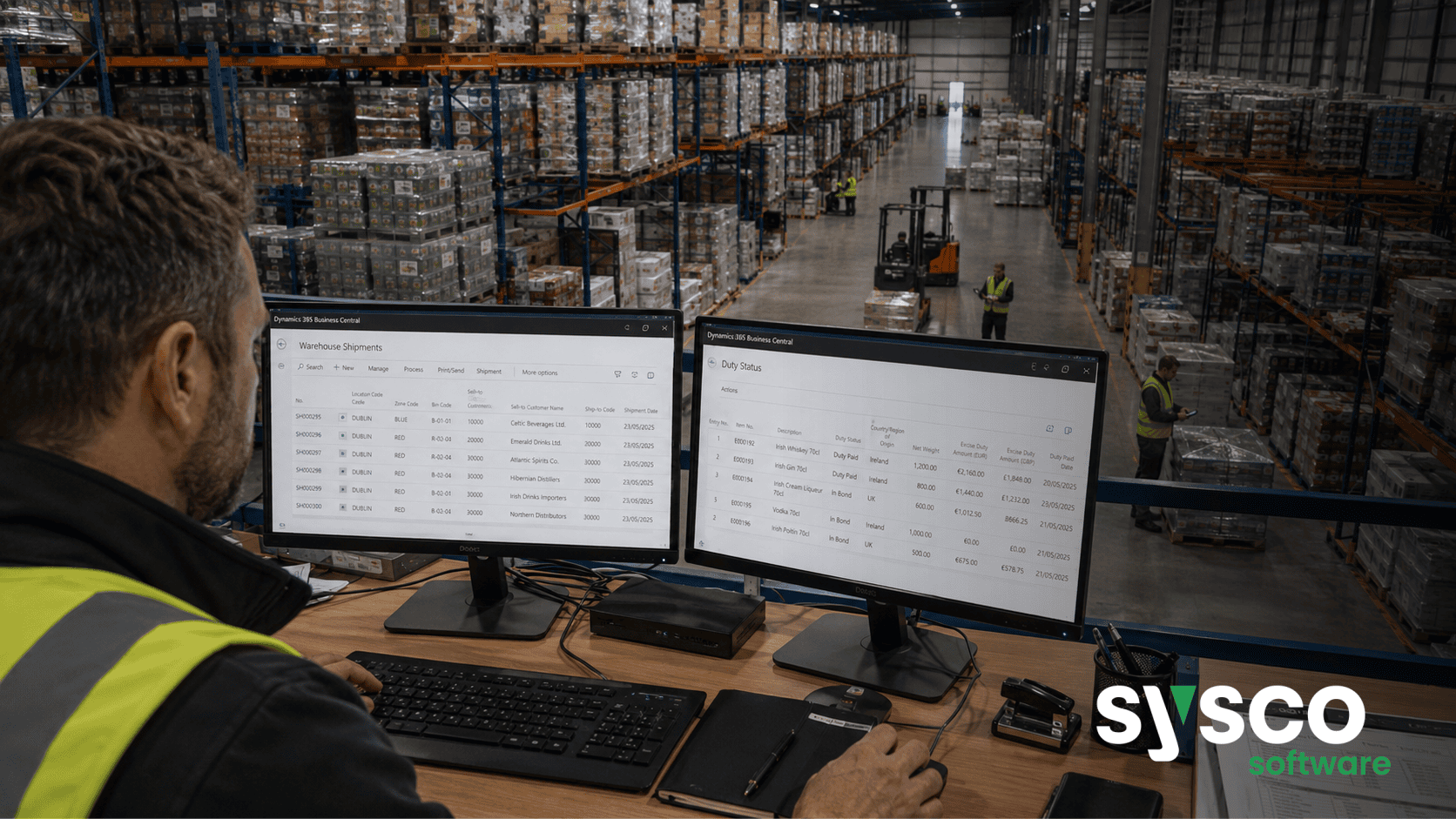
Understanding Your Bonded Warehousing Processes
Many drinks businesses find themselves grappling with processes that feel like a series of workarounds, rather than streamlined operations – and bonded warehousing often sits at the heart of this complexity. It’s not uncommon to see multiple teams maintaining separate records for duty suspension, excise calculations, warehouse movements, and finance postings, all contributing to increased risk of error and inefficiency. A clear understanding of your current processes is the critical first step in establishing a more robust and controlled system.
Mapping Your Existing Workflow
Before implementing any software solution, it’s essential to map out your existing workflow from start to finish. This includes identifying all stakeholders involved – production, warehouse staff, finance, excise compliance – and documenting each step of the process. Consider these key areas:
- Stock Receipt: How is stock received into bond? What documentation is required?
- Movement Tracking: How are goods moved between different locations within the bonded warehouse or to other approved premises?
- Duty Suspension Management: How do you track duty suspension periods and ensure compliance with HMRC or Revenue regulations?
- Excise Duty Calculation: What methods are used to calculate excise duty, and how is this information recorded?
- Documentation & Reporting: What documentation is generated for excise purposes (e.g., AAD, W8)? How is reporting handled for both internal and external stakeholders?
Identifying Pain Points
While mapping your processes, actively look for pain points – areas where inefficiencies, errors, or compliance risks arise. These might include manual data entry, reliance on spreadsheets, lack of visibility across departments, or difficulties in tracing stock movements. Documenting these issues will help you prioritize improvements and demonstrate the value of a new solution.
Classifying Stock: Bonded vs. Duty Paid
Accurate classification of stock as either bonded or duty paid is fundamental to compliant operations. Misclassification can lead to significant financial penalties and compliance breaches. It’s not simply about physical location; it’s about the legal status of the goods.
Defining Bonded Stock
Bonded stock refers to goods that are stored under excise duty suspension. This means duty has not yet been paid, and the business is responsible for ensuring the goods remain secure and accounted for. Correct classification requires a deep understanding of HMRC or Revenue regulations and product-specific requirements.
Defining Duty Paid Stock
Duty paid stock refers to goods where excise duty has been paid, making them legally available for sale or consumption within the UK or Ireland. Proper record keeping is crucial to demonstrate that duty has been correctly accounted for.
Item Classification in Business Central
Sysco’s Bonded Warehouse Solution allows you to classify items as either bonded or duty paid directly within Microsoft Dynamics 365 Business Central. This ensures consistent classification across all transactions, from stock receipt to sales order fulfilment.
- Item Master Data: Define item categories and attributes to clearly identify the duty status of each product.
- Warehouse Locations: Designate specific warehouse locations as bonded or duty paid areas.
- Transaction Tracking: Automatically classify stock based on location and transaction type.
Setting Up Warehouse Locations and Movements
A well-structured warehouse setup is essential for efficient operations and accurate tracking of stock movements within a bonded environment.
Defining Location Hierarchy
Establish a clear hierarchy of warehouse locations, distinguishing between bonded areas, duty paid zones, quarantine areas, and production spaces. This allows for granular control over stock movements and reporting.
Movement Types & Authorisations
Define specific movement types to accurately record how goods are moved within the warehouse – receipts, dispatches, internal transfers, adjustments, etc. Implement authorisation controls to ensure that only authorised personnel can initiate these movements.
Integration with Business Central
Sysco’s solution integrates seamlessly with Microsoft Dynamics 365 Business Central’s inventory and warehouse management modules, providing real-time visibility into stock levels, locations, and movement history. This eliminates the need for manual reconciliation between systems.
Managing Excise Duty Calculations and Postings
Accurate excise duty calculations are critical for compliance and financial reporting. Manual calculations are prone to errors and time-consuming; automated processes provide greater accuracy and efficiency.
Automated Calculation Based on ERN
Sysco’s solution automatically calculates excise duty based on the relevant Excise Registration Number (ERN) and posts it directly to the general ledger. This eliminates manual data entry and reduces the risk of errors.
Duty Deferment Support
The system supports excise duty deferment for spirits, wines, ciders, perries and beers, ensuring accurate tracking of deferred liabilities.
General Ledger Integration
Seamless integration with Business Central’s general ledger ensures that duty postings are accurately reflected in financial reports. This provides a clear audit trail and simplifies month-end reconciliation.
Implementing Lot and Batch Traceability
Lot and batch traceability is essential for quality control, recall management, and compliance with regulatory requirements. It’s particularly important when dealing with excise goods where product origin and production history are vital.
Serial Number Tracking
The solution enables detailed lot and serial number tracking across all stock movements, providing a complete audit trail from receipt to dispatch.
Recall Management Capabilities
In the event of a recall or quality issue, the system allows you to quickly identify and isolate affected batches, minimising potential losses and protecting your brand reputation.
Integrating Finance and General Ledger Reporting
Bonded warehousing data needs to be seamlessly integrated with finance and general ledger reporting for accurate financial management and compliance.
Real-Time Data Visibility
Finance teams gain real-time visibility into duty exposure, stock valuation, and excise liabilities directly within Business Central.
Automated Reporting
The solution supports automated generation of reports for duty, deferment VAT, acquisition VAT, tax codes, AAD, W8, W1 and W5D, simplifying compliance reporting and reducing manual effort.
Optimising Your Workflow with Sysco’s Solution
Implementing Sysco’s Bonded Warehouse Solution is more than just installing software; it’s about transforming your entire bonded warehousing process. By automating key tasks, improving visibility, and integrating data across departments, you can achieve significant operational efficiencies and reduce compliance risks.
Reduced Manual Effort
Automate repetitive tasks such as duty calculations, documentation generation, and stock movements, freeing up valuable time for more strategic activities.
Improved Accuracy & Compliance
Minimise errors through automated processes and real-time data validation, ensuring compliance with HMRC or Revenue regulations.
Enhanced Visibility & Control
Gain a complete view of your bonded stock, duty status, movements, and financial implications in one centralised system.
Ready to streamline your bonded warehousing operations? Discover how Sysco’s Bonded Warehouse Solution can transform your business and schedule a personalised walkthrough today.






